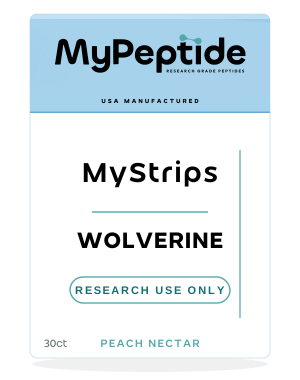
Melts Research
Research Use Only — Not for Human or Veterinarian Administration
Melts Wolverine
Wolverine.
300MCG/500MCG$145.00
View only
Mechanism of Action
Preclinical studies suggest BPC-157 modulates growth factor expression (VEGF, FGF), promotes angiogenesis, interacts with the nitric oxide system, and stabilizes the gastric mucosal barrier. Research models include tendon transection, muscle crush injury, and inflammatory bowel models.
Research Applications
- Tendon, ligament, and muscle repair models
- Gastrointestinal mucosal protection research
- Angiogenesis and wound-healing assays
- Anti-inflammatory pathway studies
Specifications
| sequence | GEPPPGKPADDAGLV (15 amino acids) |
| molecular Weight | 1419.53 Da |
| cas | 137525-51-0 |
| appearance | White to off-white lyophilized powder |
Reconstitution (Laboratory)
Melts are sublingual research formulations — refer to COA for handling and storage. Not a lyophilized injectable.
Storage & Handling
Store per COA. Protect from moisture, heat, and light.
Quality Assurance
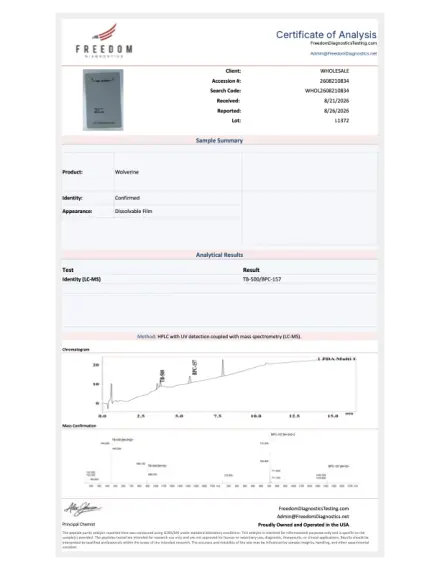
Every lot undergoes independent third-party HPLC purity analysis, mass spectrometry identity confirmation, and endotoxin testing (<0.5 EU/mg). Certificate of Analysis (COA) is stored against the SKU lot number and available through your research account portal.
Sources & References
- 1.Sikiric P, et al. Stable gastric pentadecapeptide BPC 157: novel therapy in gastrointestinal tract. Curr Pharm Des. 2011. · PubMed →
- 2.Seiwerth S, et al. BPC 157 and blood vessels. Curr Pharm Des. 2014. · PubMed →
- 3.Knezevic M, et al. Pentadecapeptide BPC 157 and the central nervous system. Neural Regen Res. 2020. · PubMed →
- 4.Sikiric P, et al. Brain-gut axis and pentadecapeptide BPC 157: theoretical and practical implications. Curr Neuropharmacol. 2016. · PubMed →