Longevity & Neuro Research
Research Use Only — Not for Human or Veterinarian Administration
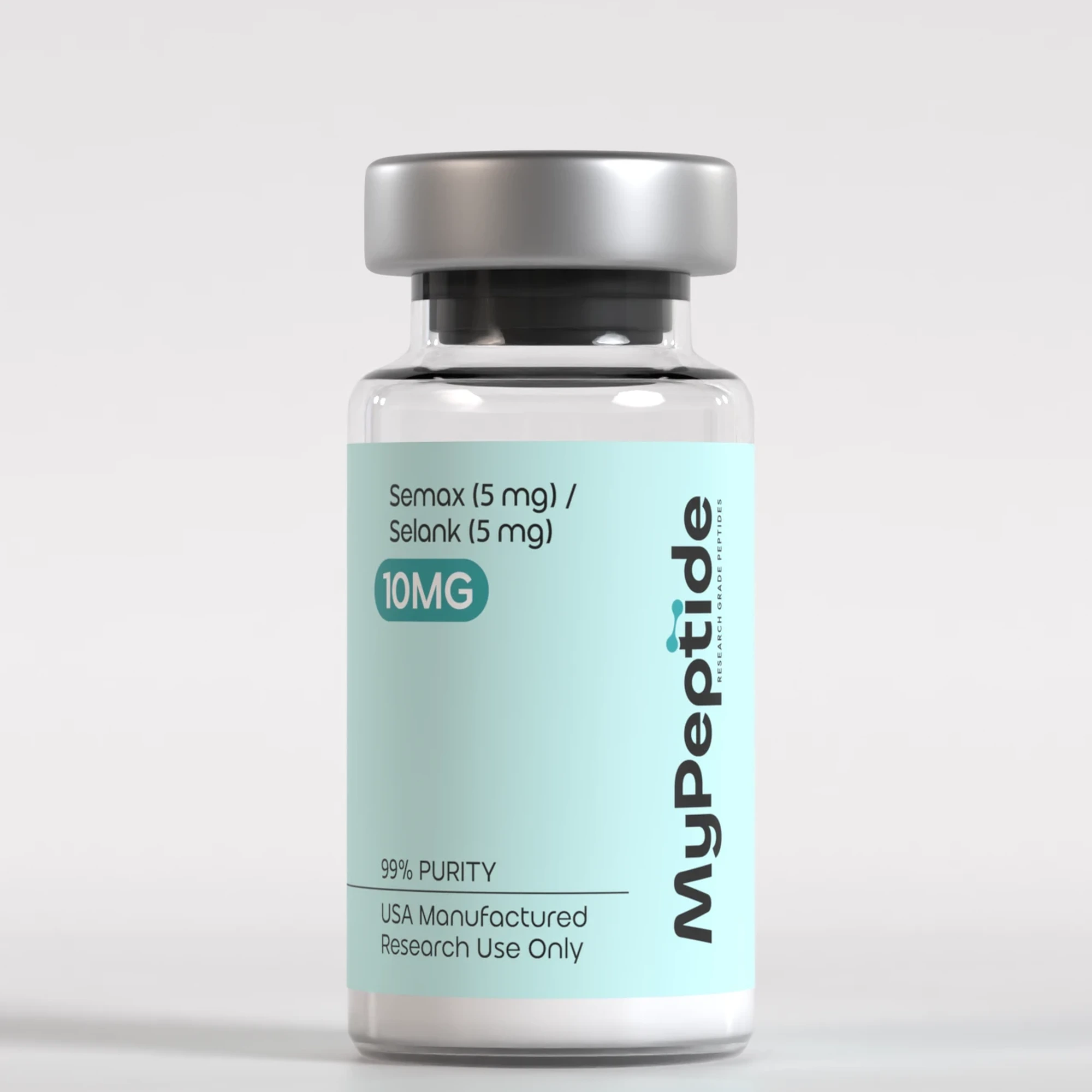
Semax/Selank Blend
This blend pairs two peptides often discussed together in nootropic-style research conversations: Semax (neurotrophic signaling themes) and Selank…
Semax/Selank Blend $62.00
View only
Mechanism of Action
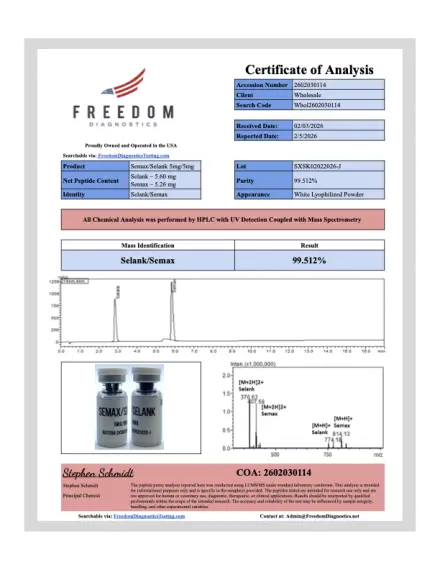
See published literature and COA for batch-specific analytical data. Research use only — not for human or veterinary administration.
Research Applications
- In vitro laboratory research
- Receptor and pathway assays
- Comparative peptide studies
Specifications
| appearance | See COA for lot-specific appearance and identity confirmation |
Reconstitution (Laboratory)
Reconstitute with bacteriostatic water under sterile laboratory conditions unless otherwise specified for your protocol.
Storage & Handling
Lyophilized: 2–8 °C long-term. Reconstituted: refrigerate at 2–8 °C. Protect from light.
Quality Assurance
Every lot undergoes independent third-party HPLC purity analysis, mass spectrometry identity confirmation, and endotoxin testing (<0.5 EU/mg). Certificate of Analysis (COA) is stored against the SKU lot number and available through your research account portal.
Sources & References
- 1.Dolotov OV, et al. Semax, an analog of ACTH(4-10) with cognitive effects, regulates BDNF and trkB expression in the rat hippocampus. Brain Res. 2006. · PubMed →
- 2.Dolotov OV, et al. Semax, an analogue of adrenocorticotropin (4-10), binds specifically and increases levels of brain-derived neurotrophic factor protein in rat basal forebrain. J Neurochem. 2006. · PubMed →
- 3.Kozlovskaya MM, et al. Selank and short peptides of the tuftsin family in the regulation of adaptive behavior in stress. Neurosci Behav Physiol. 2003. · PubMed →
- 4.Kolik LG, et al. Selank, Peptide Analogue of Tuftsin, Protects Against Ethanol-Induced Memory Impairment by Regulating of BDNF Content in the Hippocampus and Prefrontal Cortex in Rats. Bull Exp Biol Med. 2019. · PubMed →