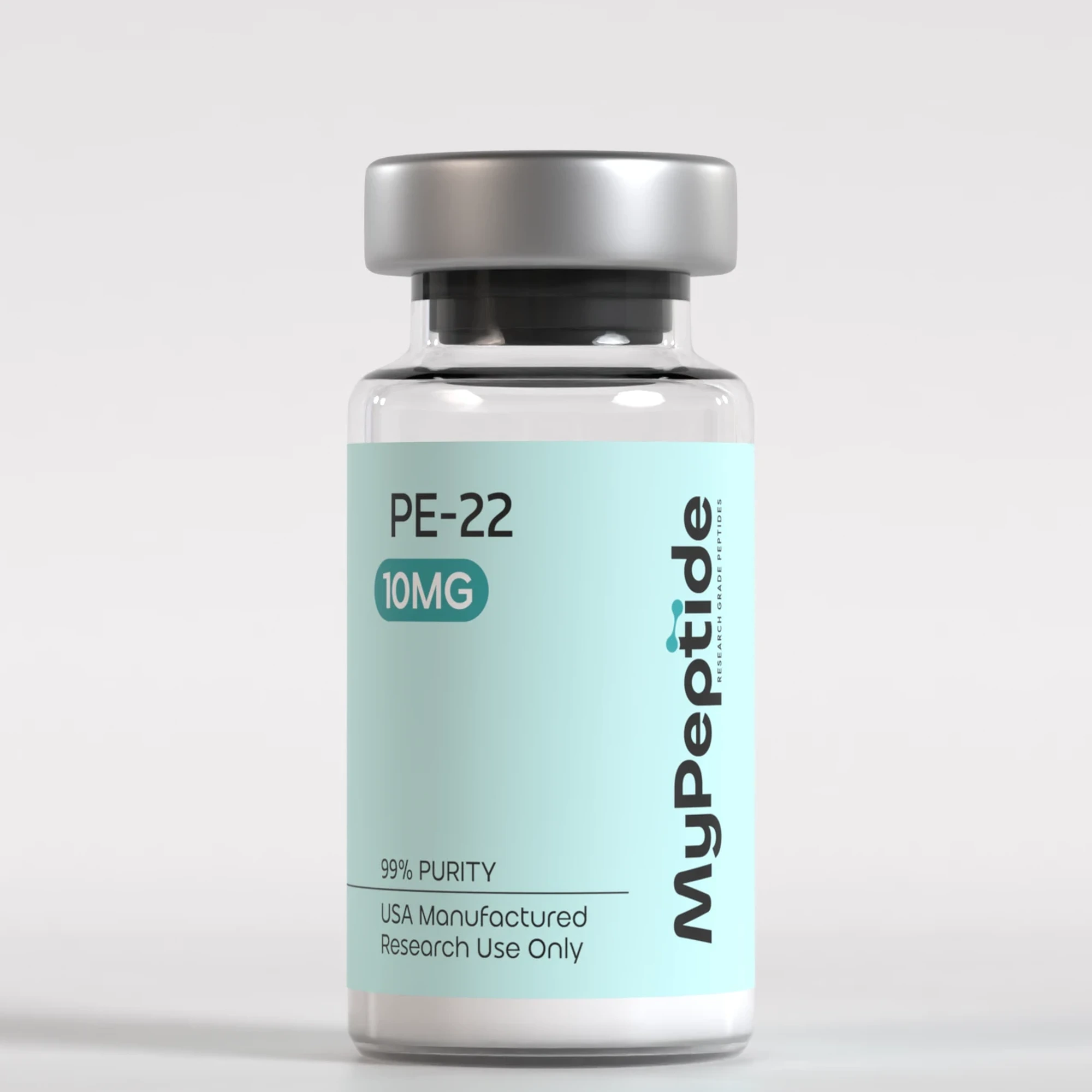
PE 22- 28 (10mg)
PE-22-28 is discussed in certain research literature as part of a peptide series related to neurobiology and ion-channel signaling (commonly linked to TREK-1…
Mechanism of Action
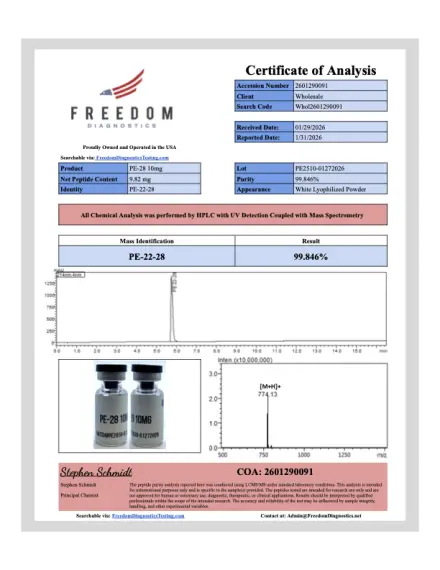
See published literature and COA for batch-specific analytical data. Research use only — not for human or veterinary administration.
Research Applications
- In vitro laboratory research
- Receptor and pathway assays
- Comparative peptide studies
Specifications
| appearance | See COA for lot-specific appearance and identity confirmation |
Reconstitution (Laboratory)
Reconstitute with bacteriostatic water under sterile laboratory conditions unless otherwise specified for your protocol.
Storage & Handling
Lyophilized: 2–8 °C long-term. Reconstituted: refrigerate at 2–8 °C. Protect from light.
Quality Assurance
Every lot undergoes independent third-party HPLC purity analysis, mass spectrometry identity confirmation, and endotoxin testing (<0.5 EU/mg). Certificate of Analysis (COA) is stored against the SKU lot number and available through your research account portal.
Sources & References
- 1.Mazella J, et al. Spadin, a sortilin-derived peptide, targeting rodent TREK-1 channels: a new concept in the antidepressant drug design. PLoS Biol. 2010. · PubMed →
- 2.Djillani A, et al. Shortened Spadin Analogs Display Better TREK-1 Inhibition, In Vivo Stability and Antidepressant Activity. Front Pharmacol. 2017. · PubMed →
- 3.Djillani A, et al. Fighting against depression with TREK-1 blockers: Past and future. A focus on spadin. Pharmacol Ther. 2019. · PubMed →