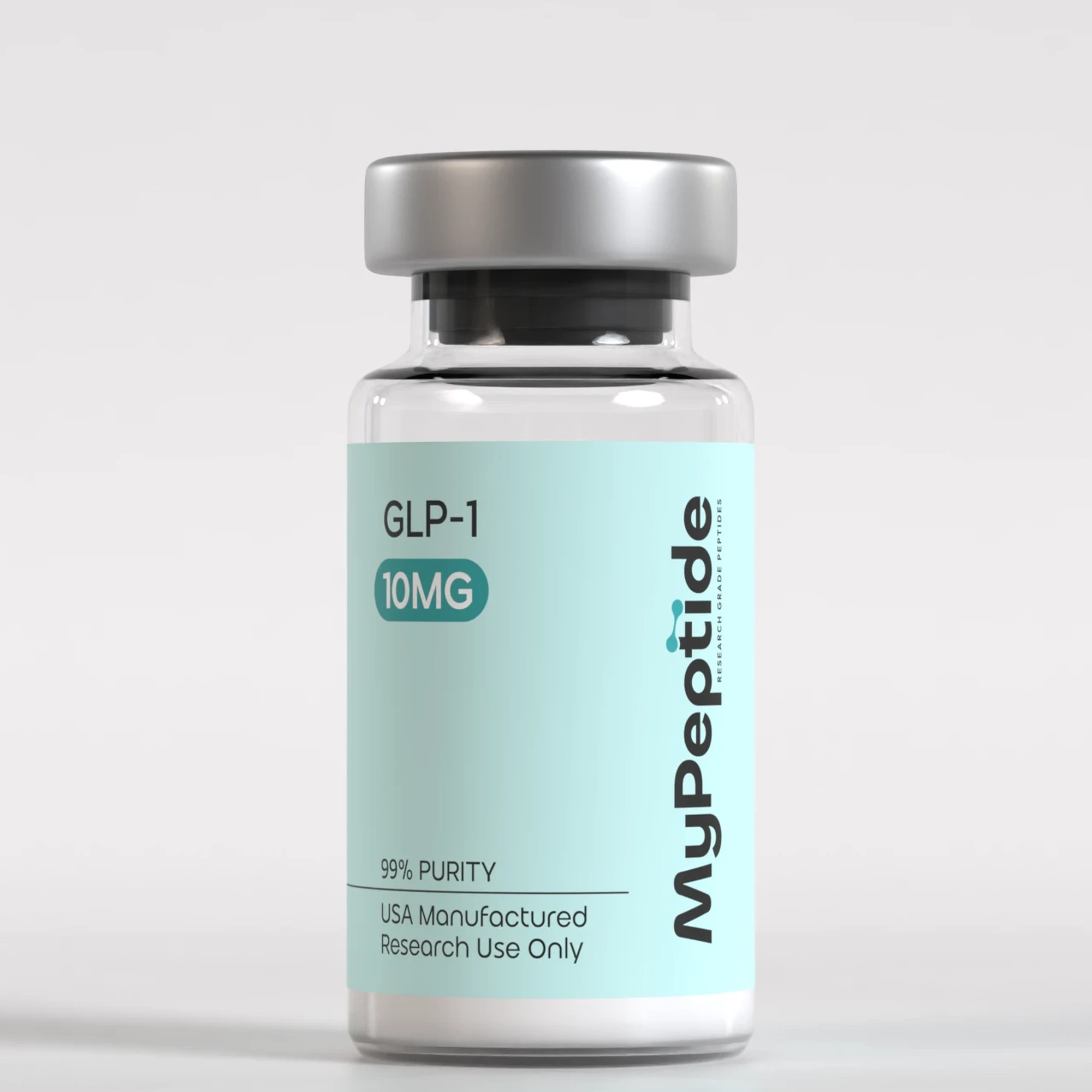
GLP-1
GLP-1 (glucagon-like peptide-1) receptor agonist analogues are central to metabolic research, modulating incretin signaling, glucose-dependent insulin secretion, and gastric motility in laboratory models.
Mechanism of Action
GLP-1 analogues bind the GLP-1 receptor (GLP1R), activating cAMP/PKA pathways in pancreatic beta cells and central appetite-regulating circuits. Research focuses on receptor binding kinetics, downstream signaling, and metabolic endpoint assays.
Research Applications
- Incretin pathway and GLP1R binding assays
- Glucose homeostasis research models
- Appetite and satiety signaling studies
- Gastric emptying and GI motility research
Specifications
| sequence | GLP-1 analogue (sequence varies by modification) |
| molecular Weight | Varies by analogue (~3–4 kDa typical) |
| appearance | White lyophilized powder |
Reconstitution (Laboratory)
Use bacteriostatic water under sterile laboratory conditions. Peptide concentration should be calculated per vial mass and verified against COA.
Storage & Handling
Lyophilized: stable for shipping at ambient temperature; long-term storage at 2–8 °C. Reconstituted: refrigerate immediately; minimize freeze-thaw cycles.
Quality Assurance
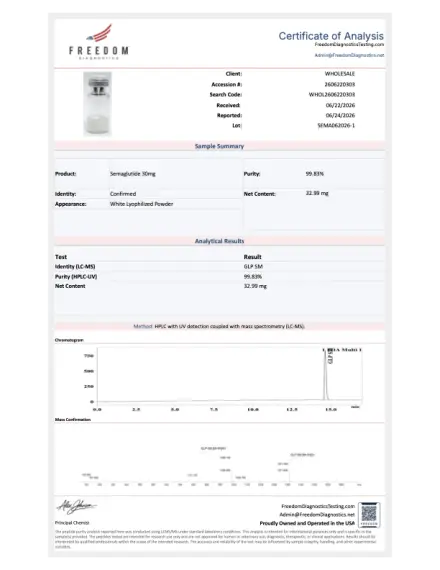
Every lot undergoes independent third-party HPLC purity analysis, mass spectrometry identity confirmation, and endotoxin testing (<0.5 EU/mg). Certificate of Analysis (COA) is stored against the SKU lot number and available through your research account portal.
Sources & References
- 1.Drucker DJ. Mechanisms of Action and Therapeutic Application of Glucagon-like Peptide-1. Cell Metab. 2018. · PubMed →
- 2.Holst JJ. The physiology of glucagon-like peptide 1. Physiol Rev. 2007. · PubMed →
- 3.Nauck MA, Meier JJ. GLP-1 receptor agonists in type 2 diabetes. Lancet Diabetes Endocrinol. 2021. · PubMed →