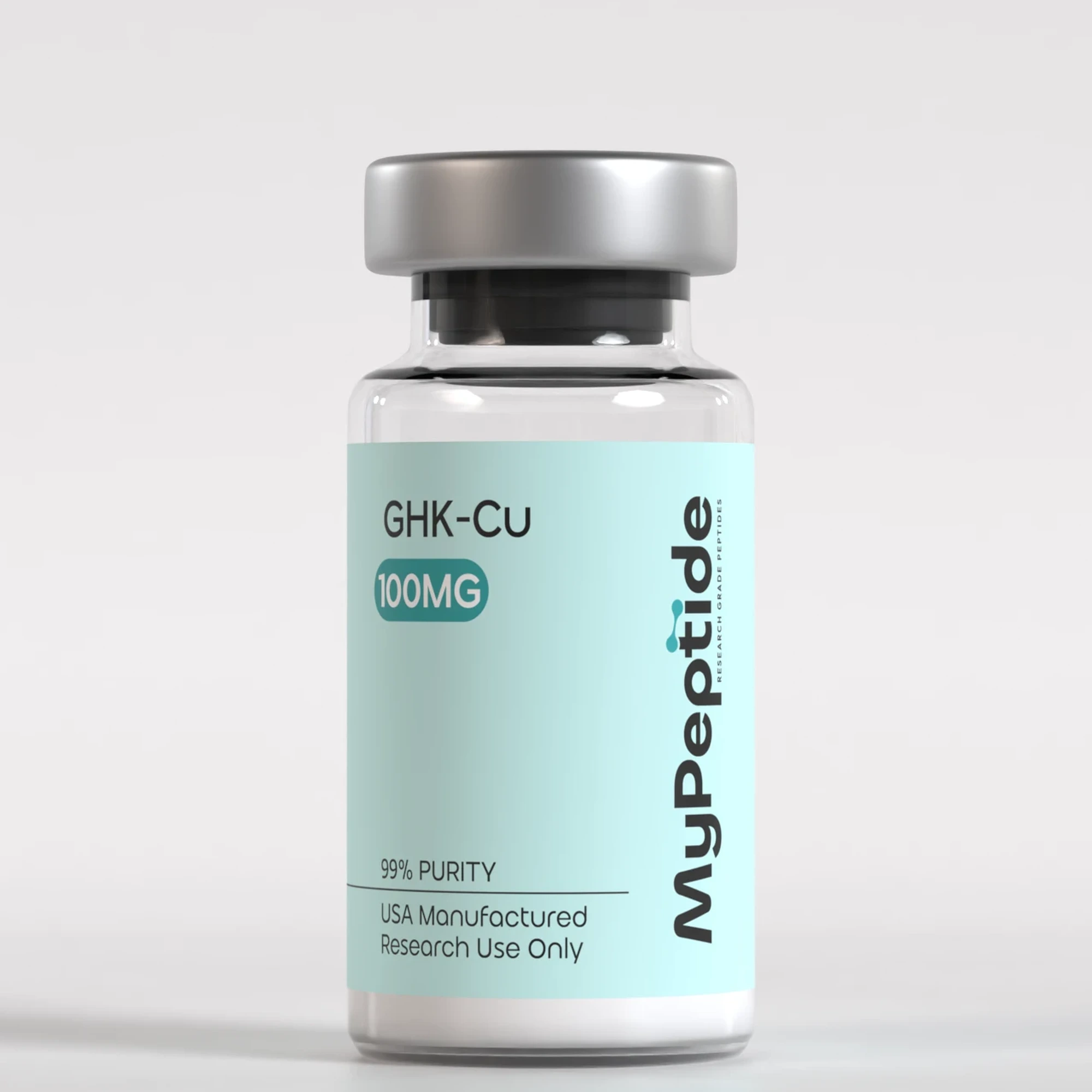
GHK-Cu (100mg)
GHK-Cu (glycyl-L-histidyl-L-lysine copper complex) is a naturally occurring tripeptide-copper complex first characterized in human plasma. It is widely studied in laboratory models of collagen synthesis, wound repair, and gene expression modulation.
Mechanism of Action
GHK-Cu delivers copper as a cofactor for lysyl oxidase and antioxidant enzymes. Research indicates modulation of genes involved in tissue remodeling, anti-inflammatory signaling, and extracellular matrix production.
Research Applications
- Collagen and ECM synthesis assays
- Wound-healing and fibroblast proliferation models
- Skin remodeling and hair follicle research
- Copper-mediated antioxidant pathway studies
Specifications
| sequence | Gly-His-Lys (Cu²⁺ complex) |
| molecular Weight | 340.38 Da (peptide); 403.92 Da (Cu complex) |
| cas | 49557-75-7 |
| appearance | Blue-tinted lyophilized powder when copper-bound |
Reconstitution (Laboratory)
Add bacteriostatic water under sterile conditions. Solution may exhibit a blue color indicating copper coordination — this is expected. Concentration depends on protocol requirements.
Storage & Handling
Lyophilized: 2–8 °C recommended. Reconstituted: refrigerate; protect from light. Copper complexes are sensitive to oxidation — use appropriate laboratory handling.
Quality Assurance
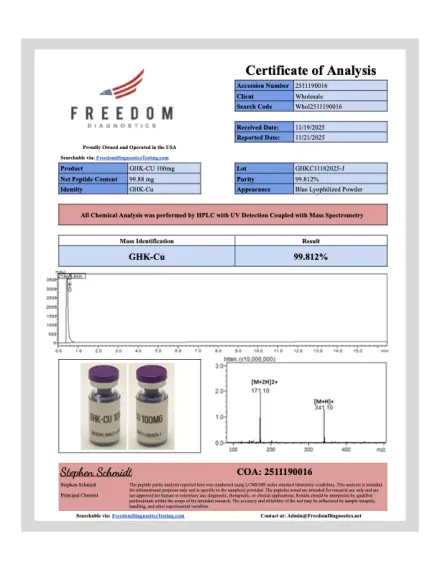
Every lot undergoes independent third-party HPLC purity analysis, mass spectrometry identity confirmation, and endotoxin testing (<0.5 EU/mg). Certificate of Analysis (COA) is stored against the SKU lot number and available through your research account portal.
Sources & References
- 1.Pickart L, Margolina A. Regenerative and protective actions of the GHK-Cu peptide. Int J Mol Sci. 2018. · PubMed →
- 2.Pickart L. The human tri-peptide GHK and tissue remodeling. J Biomater Sci Polym Ed. 2008. · PubMed →
- 3.Maquart FX, et al. In vivo stimulation of collagen synthesis in animal skin. FEBS Lett. 1993. · PubMed →